Lighter Forehead Botox: Softer Lines, Natural Movement
 By Mahmoud Mohamed Samir · Published 15 August 2026 · 4 min read

Key takeaways
- Horizontal forehead lines come from the frontalis muscle that lifts the brows – Botox softens them without erasing movement.
- Tropical UV accelerates forehead line formation; many Maldivian patients see early static lines in their late 20s.
- Micro-dosing across the forehead beats a single heavy dose – keeps natural expression and avoids dropped brows.
- Almost always combined with frown-line treatment, since the two muscle groups balance each other.
- 20-minute appointment, no downtime, full effect at 10 – 14 days, lasts 3 – 4 months.
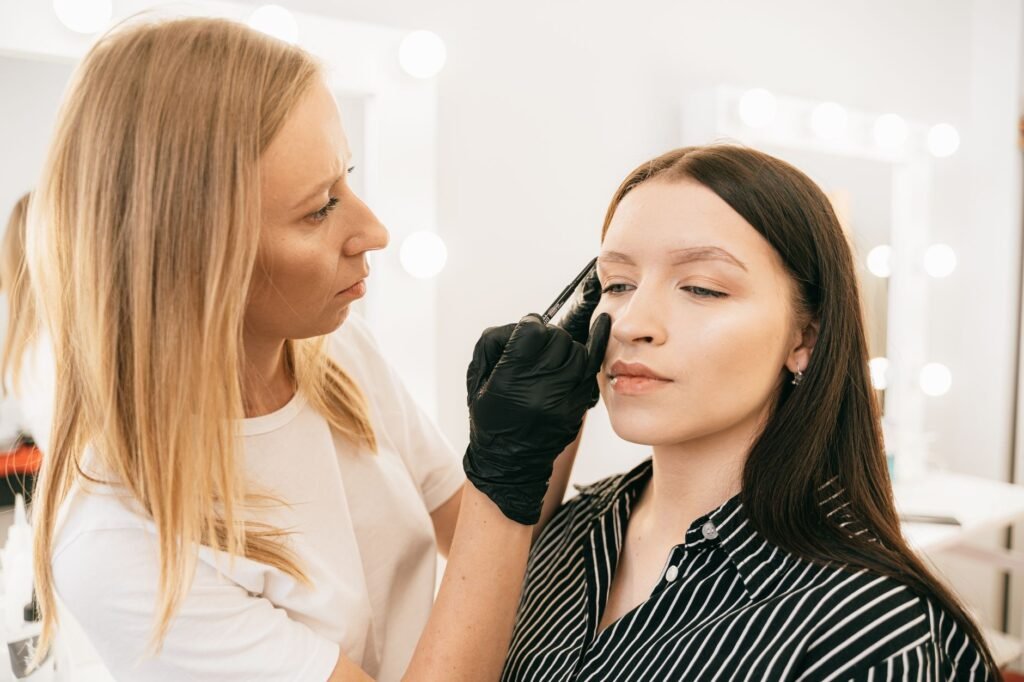
The forehead is the area where the difference between good and bad Botox is most visible. Done well, it gives a fresh, well-rested appearance. Done with too heavy a hand, it produces a smooth, motionless brow that immediately reads as treated. The fix is approach, not product. To book or ask about cost, see forehead Botox in the Maldives with Dr. Alaa Zidan in Hulhumalé.
Want the full Treatment Guide?
A plain-language guide to choosing the right treatment, what downtime really looks like, and how to prepare for your first visit, unlocked instantly, no waiting.
How forehead lines form
Horizontal forehead lines come from the repeated contraction of the frontalis – the broad muscle that lifts your eyebrows. Years of expression, plus the cumulative effect of UV exposure, etch them progressively deeper. They become permanent only after they’ve been dynamic for years.
Under Maldivian sun, that process is accelerated. Constant bright light pushes the frontalis into a defensive lifting pattern – many patients here see forehead lines forming in their late 20s rather than mid-30s.
The lighter-dose approach
A common mistake is using a high dose to fully relax the frontalis. The result is a smooth forehead – but also dropped eyebrows, a tired appearance, and a face that looks frozen. We prefer micro-dosing across the forehead: small, precisely placed injections that soften the lines without eliminating movement.
You should still be able to lift your eyebrows in surprise or concentration. The lines just become less obvious.
Why we treat the frown muscles at the same time
Forehead Botox is almost always done alongside Botox for frown lines. They work together – relaxing only the forehead without addressing the frown muscles tends to look unbalanced because the frown muscles pull the brows down while a softened frontalis can no longer counter that pull.
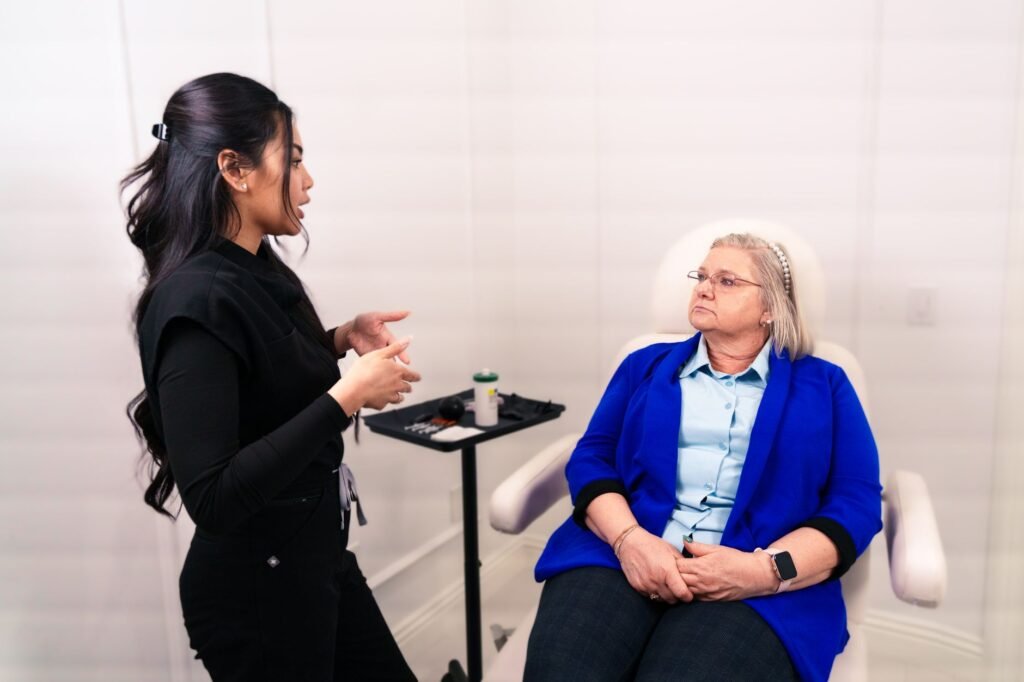
Treating both is what produces a balanced, restful upper face. We’ll plan the combination at your consultation. See our guide on Botox for frown lines in the Maldives.
Pairing with sun care in the Maldives
Botox softens the muscle pattern, but it doesn’t change the photo-ageing that drives the line. To stretch the result, daily SPF 50+, a wide-brimmed hat for outdoor work, and good UV-blocking sunglasses (which reduce squinting) are the trio that helps most. We give every patient a short post-Botox sun plan.
For a broader look at treating expression lines, see our guide to forehead wrinkle treatment and what actually works alongside Botox.
Still deciding what's right for you?
Get instant access to the full Treatment Guide, concerns, downtime, aftercare, and what to expect at your first visit.
Frequently asked questions
Will my eyebrows drop after forehead Botox?
Not when it’s dosed and placed correctly. Heavy dosing of the frontalis can over-relax it and let the brows drop – which is exactly why we prefer micro-dosing. We also always treat the frown-line muscles in the same session so the brow stays balanced.
Why does my forehead need treatment with my frown?
The frontalis (forehead lifter) and the corrugators/procerus (frown muscles) are antagonists – they pull against each other. Treating one without the other tends to over-emphasise the untreated group and looks unbalanced.
Can I do forehead Botox preventatively?
Yes. Treating dynamic lines before they become static (visible at rest) is one of the most effective uses of Botox. In the Maldives, many patients start in their late 20s for this reason.
Will it stop me looking surprised?
No – micro-dosing preserves enough movement that you can still lift your brows in surprise or concentration. The horizontal lines just become softer.
How often will I need it?
Most patients book every 3 – 4 months at first. Over time, many find they can stretch the interval to every 5 – 6 months as the muscle stays softer between treatments.
Related reading: How Long Does Forehead Botox Last?
Sources & further reading
Mahmoud Mohamed Samir is a digital marketing specialist at BrightSeen Marketing Agency, the agency that runs this clinic’s Google search and AI search visibility (SEO and GEO), Meta Ads and website. Medical content is reviewed by Dr. Alaa Zidan.
This article is for educational purposes and is not a substitute for personal medical advice. To discuss your skin and treatment options, please book a consultation.
Have a question about this?
Send a photo and a short note on WhatsApp for an honest treatment recommendation from Dr. Alaa.