
Hyperhidrosis treatment in the Maldives
Botox injections that block the nerve signals triggering excessive sweating, most commonly used for the underarms, offering months of relief in Maldives from a condition that can be genuinely disruptive.
How it works
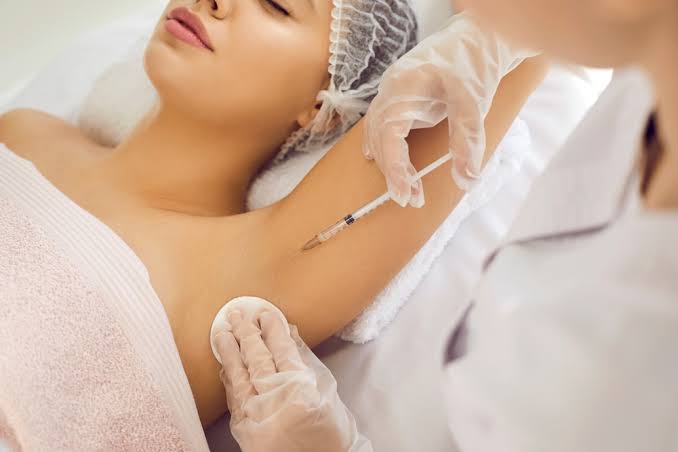
Sweat glands are activated by a chemical messenger released from nearby nerve endings. Botox is injected just beneath the skin in a grid pattern across the affected area, blocking that messenger so the signal never reaches the gland. The glands themselves are unaffected and sweating elsewhere on the body is not changed, only the treated area produces less sweat.
What to expect
Treatment involves a short series of shallow injections spaced roughly 1 to 2cm apart across the area, taking around 30 to 45 minutes for both underarms. Numbing cream is available for anyone concerned about discomfort, though the injections are shallow and generally well tolerated. There is no downtime and most patients return to normal activities immediately, with a noticeable reduction in sweating within the first week and full effect by around two weeks.
Who it suits
This suits anyone with excessive underarm, palm or sole sweating that affects daily life, clothing choices or confidence, which is a common and often under-treated concern in a hot, humid climate like the Maldives. It is worth considering both for people who sweat noticeably more than others in similar conditions and for those who have already tried stronger antiperspirants without lasting relief.
Safety and who should avoid it
Botox for hyperhidrosis has been used medically for decades and is considered safe when administered by a trained clinician. It is not suitable during pregnancy or breastfeeding, or for patients with certain neuromuscular conditions. Very rarely, some patients notice mild compensatory sweating in another area, and this is discussed at consultation as part of setting realistic expectations.
Why botulinum toxin works for excess sweating
Hyperhidrosis, or excessive sweating, responds well to botulinum toxin injected in a fine grid across the underarms, palms or soles, where it blocks the nerve signal that triggers the sweat glands rather than blocking the glands themselves. The reduction in sweating is typically noticeable within a week, lasts 4-6 months, and can make a significant practical difference for patients in a hot, humid climate where sweating is already more pronounced.
Hyperhidrosis treatment Maldives: cost and booking in Hulhumalé
Dr. Alaa Zidan offers hyperhidrosis treatment in the Maldives at Life Care Medical Center in Hulhumalé, a short drive from Malé. The cost depends on the area treated, such as the underarms, palms or forehead, and the dose that area needs, and the full figure is explained at consultation before anything is booked.
Botox for sweating is especially useful in the Maldives heat and humidity, and hyperhidrosis treatment cost depends mostly on which area is treated. For the step-by-step background before you book, read our hyperhidrosis guide, or send Dr. Alaa a photo and your question on WhatsApp.
What results look like over time
Sweating measurably reduces within a few days and keeps improving over 1-2 weeks, typically lasting 4-6 months per treatment.
Often paired with
Usually a standalone treatment, though some patients repeat it seasonally ahead of hot months in the Maldives.
Who might want to wait
If your excessive sweating started suddenly or is linked to another medical condition, that should be investigated first, since treating the symptom alone could mask something that needs attention.
Common myth
“Is this just a stronger deodorant?” – No. It works at the nerve level to temporarily block the signal that triggers sweat glands, rather than blocking odor or absorbing moisture.
Further reading
Not sure if Hyperhidrosis Treatment in the Maldives (Excessive Sweating) is right for you?
Send a few details and Dr. Alaa will get back to you personally on WhatsApp or email, no obligation.
This page is for education and is not a substitute for personal medical advice. Suitability, risks and results are assessed at consultation.
Related treatments
Frequently asked questions
What is hyperhidrosis treatment?
Hyperhidrosis treatment uses botulinum toxin injections to temporarily block the nerve signals that trigger excessive sweating, most commonly in the underarms, palms or soles.
Is this only for underarms?
Underarms are most common, though palms and soles can also be treated.
How long does relief last?
Typically 6 to 9 months before a repeat session is needed.
Does it hurt?
Injections are shallow and quick; numbing cream can be used if needed.
Is hyperhidrosis a medical condition?
Yes, excessive sweating beyond what is needed for temperature regulation is a recognised medical condition, and treatment is medical, not purely cosmetic.