Botox for Frown Lines in the Maldives — Smooth, Not Frozen
How Botox treats frown lines properly — what to expect, how the Maldivian sun shapes timing, and why restraint reads better than the maximum dose.
By Dr. Alaa Zidan · Medically reviewed March 2026
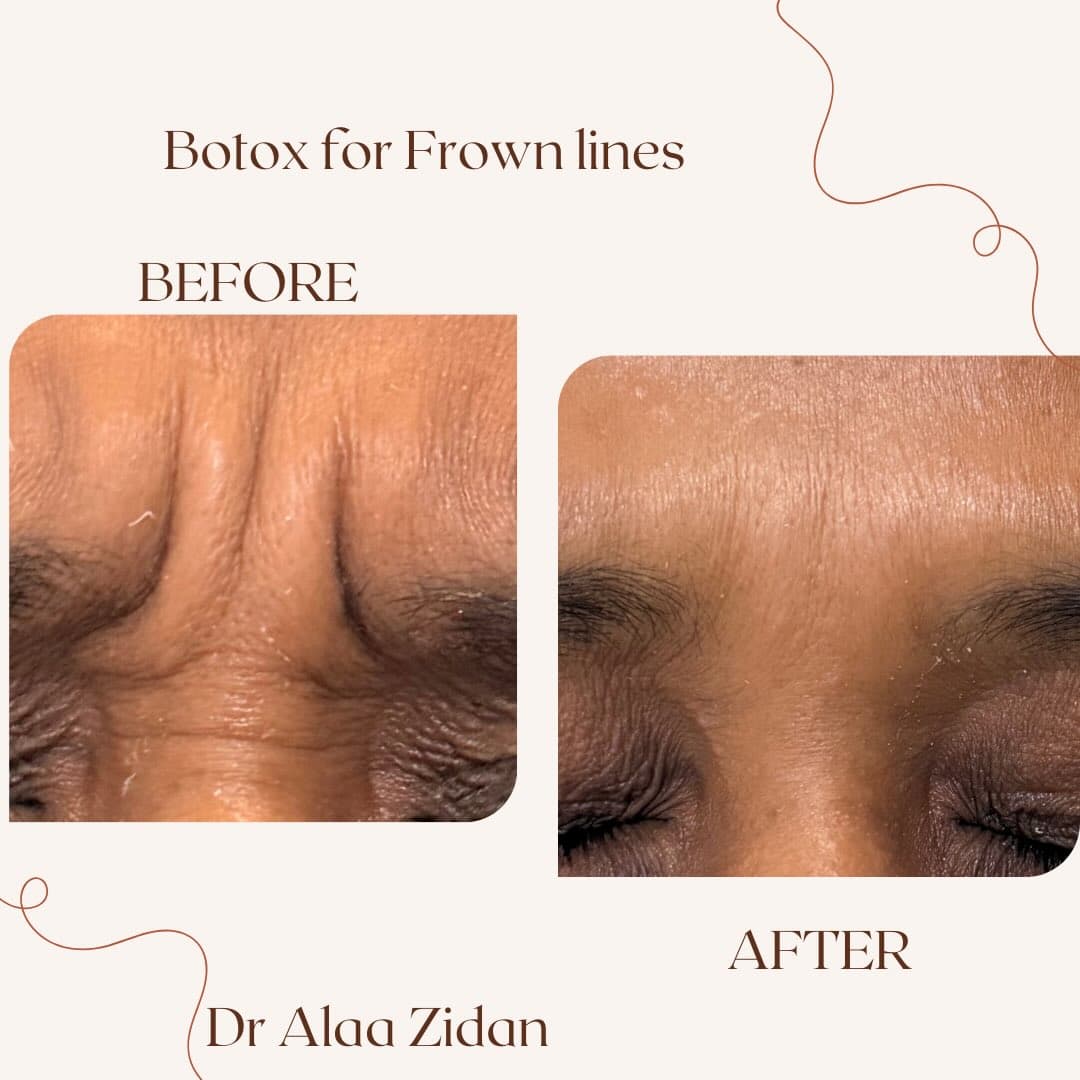
Frown lines — the vertical creases between the eyebrows that deepen when you concentrate, are tired, or simply think — are one of the most common reasons people first try Botox. In the Maldives, they appear earlier than they do in cooler climates because the bright equatorial sun causes constant subtle squinting. This guide walks through how Botox treats frown lines, what to expect, and why a restrained approach matters under tropical light.
How does Botox treat frown lines?
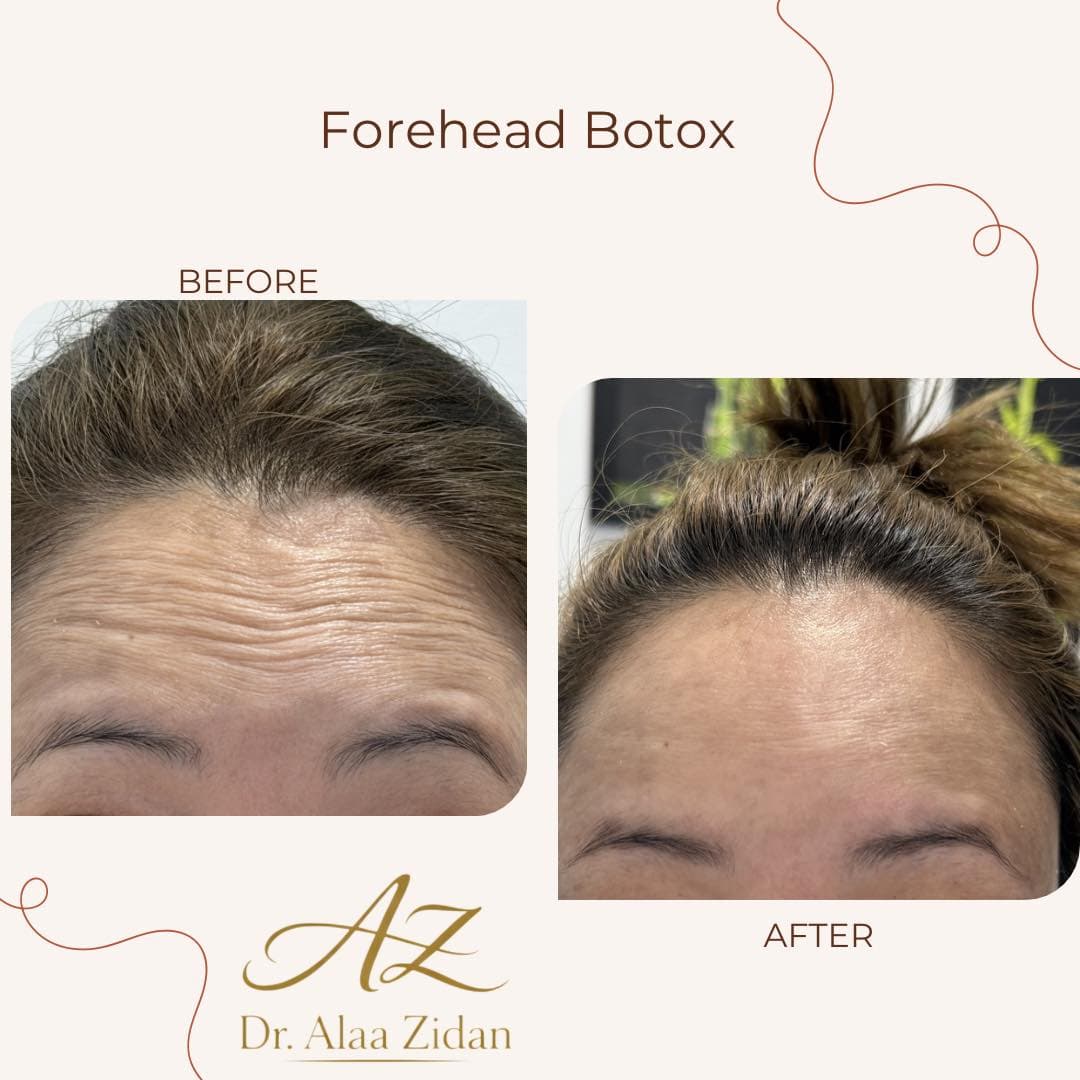
Botox temporarily relaxes the three small muscles between the brows — the corrugator supercilii and procerus — that pull the skin together when you frown. With those muscles softened, the skin above smooths out and the line stops deepening.
The treatment isn't 'paralysing' your face. At the right dose, it dampens the contraction without erasing expression. You should still be able to make a light frown after treatment; it just no longer carves into your skin the way it did.
Why do Maldivian patients develop frown lines earlier?
Constant bright equatorial sun creates a feedback loop of subconscious brow furrowing. Even with sunglasses, the brain reflexively engages the glabellar muscles to shield the eyes. Over years, that repeated contraction etches the line into the skin — first only on movement, then permanently at rest.
Many Maldivian residents and frequent visitors see early frown lines forming in their late 20s rather than the mid-30s typical of cooler climates. The good news: this is one of the most preventable lines if treated early. See our Maldives skincare guide for the sun-care companion routine.
How long does Botox for frown lines last?
On average, 3–4 months — sometimes longer with repeat treatments, as the muscle 'learns' to stay relaxed. Some patients metabolise Botox faster (younger, more active, more sun-exposed metabolisms tend to be quicker); others stretch well past 4 months.
Most of our patients schedule their next treatment between months 3 and 4, before the line fully returns. That keeps the muscle in a softened state continuously, which is what produces the cumulative anti-ageing effect over years.
How does a Botox session work?
A few precise injections, very small needles, no anaesthesia needed. The full appointment runs about 20 minutes — most of which is consultation, photography, and aftercare instructions. The injections themselves take 60 seconds.
You can return to normal activities immediately. Results begin showing in 3–5 days and reach full effect at 10–14 days. We do a complimentary check-in at 2 weeks to confirm placement and add small top-ups if any area needs further softening.
Does Botox hurt?
Most patients describe it as quick pinpricks — uncomfortable for a second, no lingering pain. The needle is fine, the volume injected is tiny, and the whole sequence is over in under a minute. We can apply topical numbing cream for very needle-anxious patients, but most don't request it.
Why does restraint matter so much in the Maldives?
There's a difference between Botox that softens an expression and Botox that erases it. The first reads as well-rested. The second reads as treated — and that distinction is especially visible under bright tropical light.
Our preference is always the first. That means smaller, carefully placed doses, and a willingness to under-treat slightly rather than over-treat. You should still be able to express yourself. The frown is what we're softening — not your personality.
Who is a good candidate?
Anyone whose frown lines have started bothering them — whether because they make you look angry, tired, or because the line is starting to deepen with age. There are two broad indications:
Reactive Botox
For patients in their 30s and beyond whose glabellar lines are already visible at rest. Botox softens the muscle pattern so the existing line has a chance to flatten. Combined with microneedling to stimulate collagen underneath, the line becomes meaningfully less visible over 3–6 months.
Preventative Botox
For younger patients (typically 25–35) who have dynamic lines but not yet static ones. Treating the muscle now prevents the line from ever becoming permanent. This is one of the most effective uses of Botox and increasingly popular in Maldivian patients given the early sun exposure.
What does aftercare look like?
Aftercare for Botox is mercifully simple compared with other aesthetic treatments:
- No lying flat for 4 hours after the procedure.
- No vigorous exercise or sauna for 24 hours.
- No facial massage on the treated area for 48 hours.
- SPF as usual — Botox doesn't change your sun rules, but consistent sun care extends your result and prevents new lines from forming.
- Swimming and beach time the next day is completely fine.
Will frown lines come back worse if I stop?
No. This is one of the most common worries and one of the most easily answered: if you stop, the muscle activity returns gradually over 3–4 months and your frown lines return to where they would have been without treatment — not worse.
In fact, regular treatment over years typically results in *less* line formation than no treatment at all, because the skin spends much less time being repeatedly creased.
Is it safe to combine Botox with other treatments?
Yes, and many patients do. Common combinations we plan in the same visit or close together:
- Forehead Botox — see our dedicated guide on forehead Botox in the Maldives. The two muscle groups balance each other, so treating them together produces a more natural result.
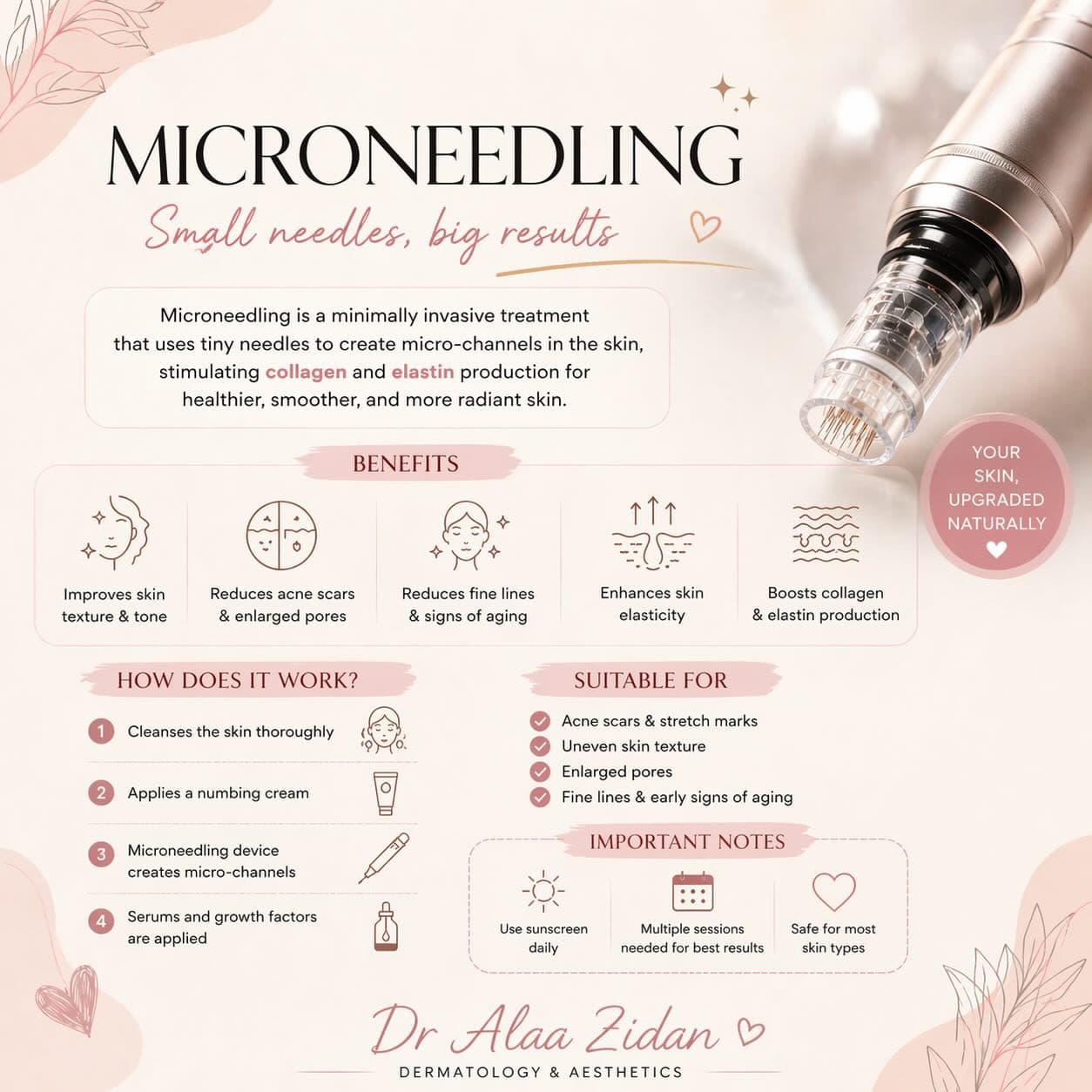
- Microneedling — Botox on the muscle, microneedling for the skin texture above it. Schedule the microneedling 2 weeks after Botox.
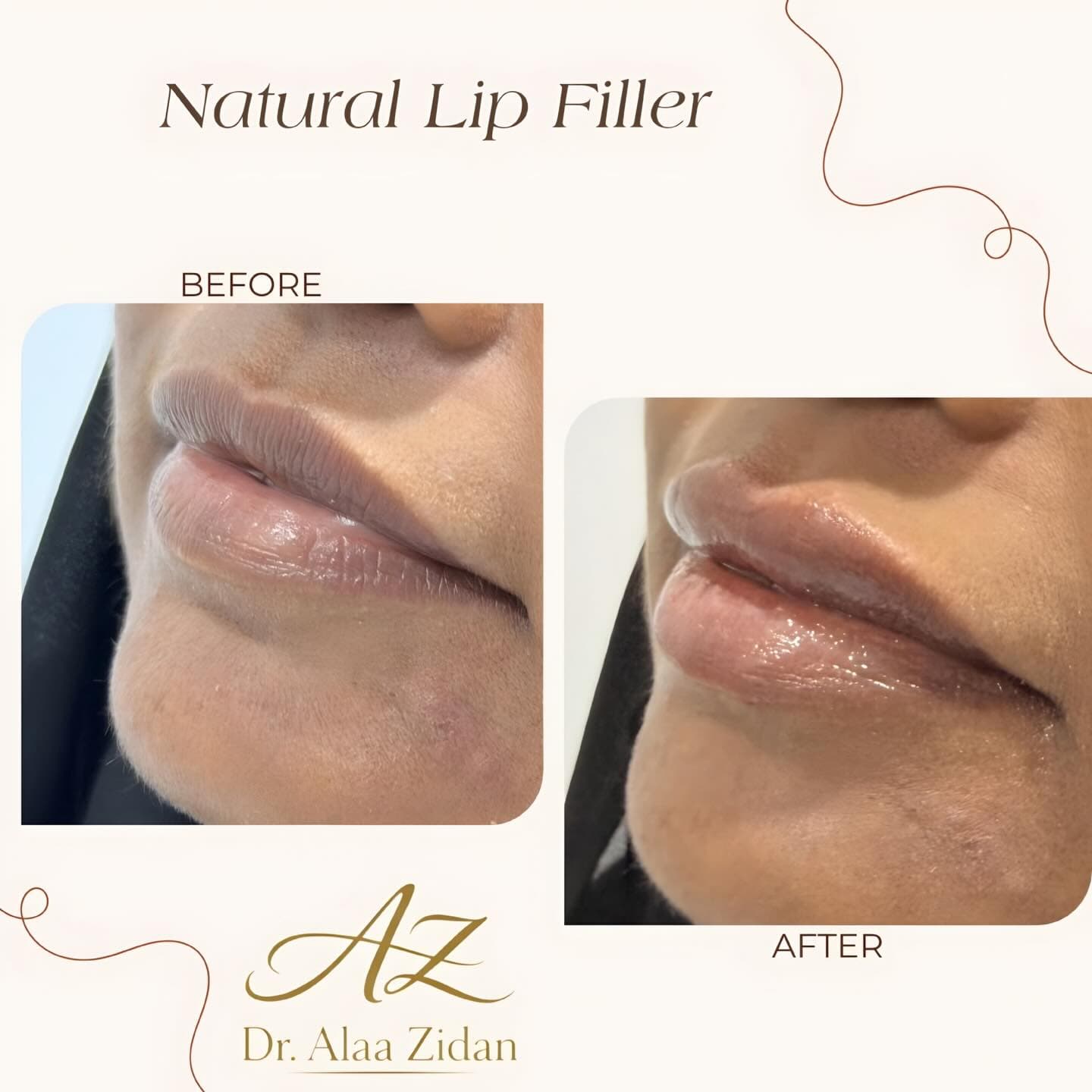
- Lip filler — Botox upper face and lip filler lower face in the same visit is a popular combination.
- Skin boosters — improves overall skin quality alongside the muscle work.
What's the difference between Botox and filler?
Different tools for different problems. Botox relaxes muscles to soften lines caused by expression. Filler adds volume to areas that have lost it. Frown lines are an expression problem, so Botox is the right tool. Tear troughs or lip thinning are volume problems, so filler is the right tool.
Confusing the two leads to disappointing results. A good clinician maps which lines are 'expression lines' (Botox) and which are 'static volume-loss lines' (filler) at the consultation, before any product comes out.
How much does Botox cost in the Maldives?
Pricing depends on the dose required for your specific muscle pattern — some patients need more units than others to achieve the same softening. Every quote is personalised after consultation. We share an exact price on WhatsApp before you commit to anything.
Booking Botox for frown lines in the Maldives
Botox for frown lines is performed at Life Care Medical Center, Hulhumalé. To book or to ask whether it's right for you, message Dr. Alaa Zidan's team on WhatsApp at +960 793 7512 — same-day reply.
If this is your first aesthetic treatment, you might want to read our pillar guide on aesthetic dermatology in the Maldives first.
Frequently asked questions
Will I still be able to express emotion?
How soon will I see the result?
Is it safe to fly home the day after?
Will frown lines come back worse if I stop?
Why are early frown lines so common in the Maldives?
Sources & further reading
This article is for educational purposes and is not a substitute for personal medical advice. To discuss your skin and treatment options, please book a consultation.
Part of our pillar guide
Aesthetic Dermatology in the Maldives — The Complete Guide
A clinical guide to aesthetic dermatology in the Maldives: what treatments work for Maldivian skin and climate, what to expect, how to choose, and how to plan care that respects the sun and salt of island life.
Read the complete guide →Join the conversation
Comments & questions
Leave a question or share your experience. Dr. Alaa's team reads every comment and replies personally. Sign in once with GitHub to post — your comment appears here for other readers and is emailed to the clinic for a personal follow-up.
Prefer a direct conversation?
Same-day replies on WhatsApp and Instagram.