Microneedling in the Maldives: Small Needles, Big Results
 By Dr. Alaa Zidan · Published 15 August 2026 · 8 min read
Key takeaways
- Microneedling triggers your own collagen and elastin response – no foreign substance is added to the skin.
- Particularly effective in the Maldives for sun-driven texture changes, fine lines, and post-inflammatory marks.
- Strict SPF 50+ for at least 2 weeks post-treatment is non-negotiable under Maldivian sun.
- A typical course is 3 – 4 sessions, 4 – 6 weeks apart. Maintenance once or twice a year.
- Same-day downtime: 24 – 48 hours of redness, then back to normal life – including beach (with shade and SPF).
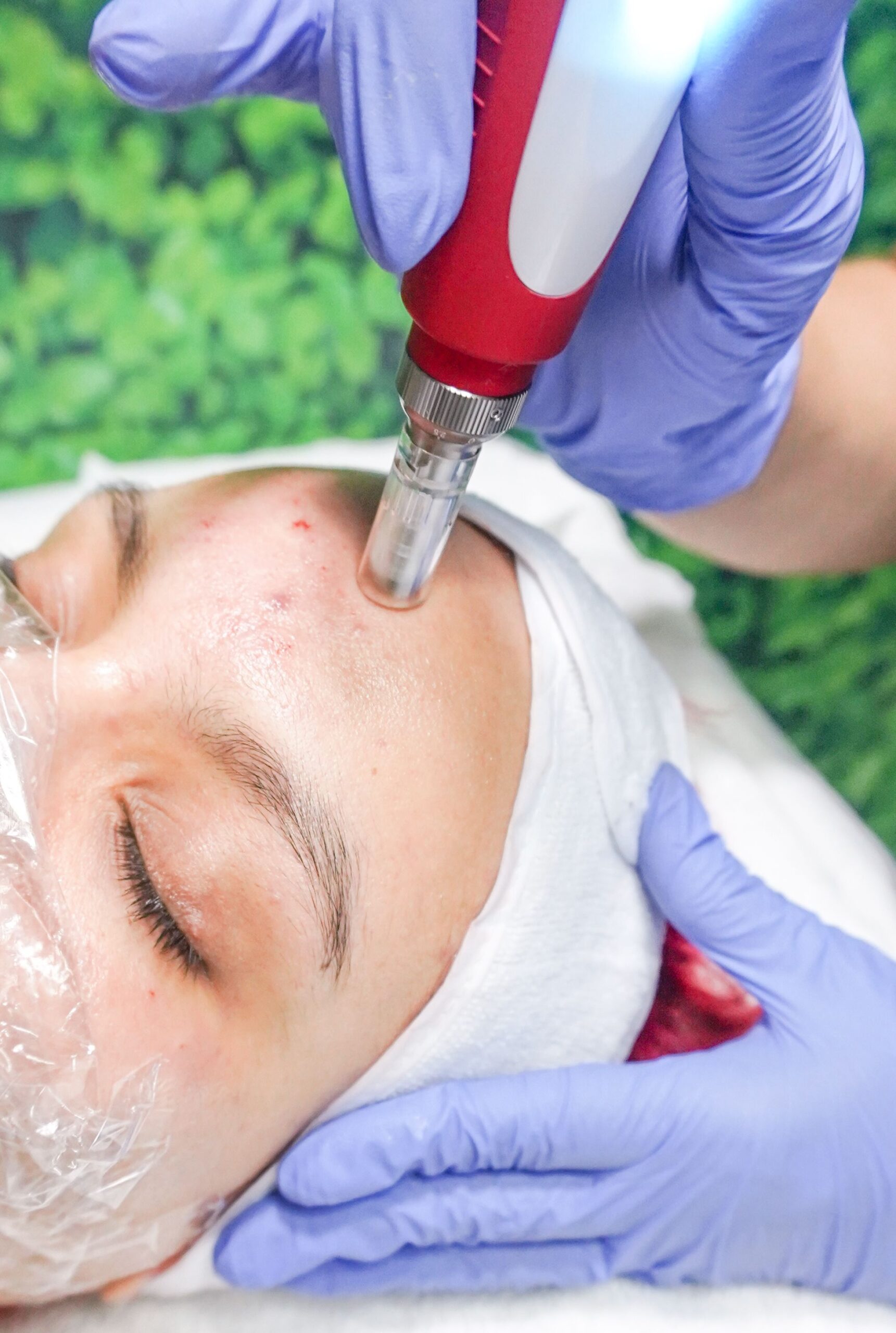
Microneedling has been one of the most consistently popular treatments in the clinic – and for good reason. The principle is straightforward: a precision dermapen with very fine, sterile, single-use needles creates controlled micro-channels in the skin. Those channels trigger a wound-healing cascade. The result is more collagen, more elastin, smoother texture, and a brighter surface – all built from your own biology. Small needles. Big results.
Want the full Treatment Guide?
A plain-language guide to choosing the right treatment, what downtime really looks like, and how to prepare for your first visit, unlocked instantly, no waiting.
What is microneedling and how does it work?
Microneedling is a minimally invasive collagen-induction therapy that uses an automated pen with fine sterile needles to create thousands of controlled micro-channels in the dermis. Your body responds by producing new collagen and elastin, the structural proteins that keep skin firm and even.
Unlike ablative laser, which removes the top layer of skin, microneedling preserves the epidermis and triggers regeneration from underneath. That makes it safer for medium-to-dark skin tones common in the Maldives, with far less pigmentary risk.
Is microneedling safe for Maldivian skin?
Yes. Microneedling is one of the safest collagen-stimulation options for Fitzpatrick III – VI skin tones, which cover most Maldivian and South Asian patients. Because it works mechanically rather than thermally, it doesn’t disrupt melanocytes the way heat-based lasers can.
That said, technique and aftercare matter. Treatment under tropical UV adds requirements that don’t exist in cooler climates – most importantly, strict sun avoidance and SPF 50+ for at least two weeks after each session. We walk every patient through a tailored aftercare plan based on their lifestyle (beach time, work outdoors, water sports).
Why does microneedling suit Maldivian skin specifically?
Maldivian patients arrive with a specific pattern of skin change: dispersed pigmentation from sun, slightly enlarged pores, fine-line crepiness around the eyes by the late 20s, and occasional post-inflammatory marks from acne or insect bites.
Ablative laser would address these but carries pigmentary risk on medium-to-dark skin tones, and the 5 – 7 days of redness and peeling are hard to schedule around beach life or work. Microneedling threads a useful middle path: enough collagen stimulation to make real change, without the heat-based pigment disruption of laser and with downtime measured in hours, not days.
Combined with a proper Maldives-tuned skincare routine, it’s the most flexible single tool in the aesthetic menu here.
What can microneedling treat?
Microneedling addresses a broad list of common concerns, often several at once:
- Texture and tone unevenness from sun and humidity
- Acne scars – atrophic, rolling, and ice-pick (with adapted depth)
- Stretch marks on body areas
- Fine lines and early signs of ageing around the eyes and mouth
- Enlarged pores, especially on the central face
- Post-inflammatory pigmentation from acne or insect bites
- General lack of glow and reduced skin density
How does microneedling compare with other treatments?
Microneedling vs chemical peels
Peels exfoliate and brighten the surface, while microneedling stimulates deeper structural change. For texture and acne scars, microneedling delivers more lasting improvement. For tone and uneven pigmentation, peels are often faster. The two work beautifully together – a peel one week, microneedling the next, repeated as a course.
Microneedling vs laser resurfacing
Laser tends to deliver dramatic results in fewer sessions, but the downtime and pigmentary risk make it a hard sell for many patients in tropical climates. Microneedling is gentler, slower-building, and far more forgiving for the Maldivian context. We almost always pick microneedling first.
Microneedling vs PRP (platelet-rich plasma)
These are complementary, not competing. Microneedling is the delivery method; PRP is one of several serums that can be applied during the procedure. Microneedling with PRP combines mechanical stimulation with your own growth factors, accelerating recovery and amplifying the result. We offer it as an upgrade for patients with significant scarring or noticeable laxity.
How does a microneedling session work?
The session takes about 45 minutes, plus 30 minutes for prep and aftercare. The skin is cleansed thoroughly. A topical numbing cream is applied for 20 – 30 minutes so you’re comfortable throughout. The precision dermapen is then passed over the treatment area in overlapping passes – needle depth varies by region (forehead vs. cheeks vs. chin) and is adjusted in real time.
Once the channels are open, targeted serums and growth factors are massaged in. These absorb far deeper than they ever could on intact skin, multiplying the visible effect. After the procedure, the skin is calmed with a soothing mask and a generous layer of mineral SPF.
Does microneedling hurt?
Most patients describe it as a mild prickling, easily tolerated thanks to the topical numbing cream applied 20 – 30 minutes before the procedure. There’s no anaesthesia, no IV sedation, no aftermath beyond mild redness.
For sensitive areas (around the eyes, the upper lip), we slow the pace and use lighter depth settings. If you’ve never had it before, the consultation includes a chance to feel the device on a small patch before the full session.
What does aftercare look like in the Maldives?
Aftercare matters more here than almost anywhere else in the world because the sun is the single biggest variable. Strict adherence to the following keeps results clean and prevents pigmentation:
- Mineral SPF 50+ every morning, reapplied every 90 minutes outdoors, for at least 2 weeks.
- No direct sun for 48 hours. Shade and a wide-brimmed hat for the first week.
- No sea, pool, or steam for 48 hours. Salt and chlorine on freshly-channelled skin cause inflammation.
- Gentle cleanser and a barrier moisturiser only for the first 3 days – no retinoids, no acids, no exfoliating.
- Don’t pick or scrub the slight roughness or ‘sandpaper’ feel that appears on day 2 – 3 – it sheds on its own.
- Sleep slightly elevated on night 1 to minimise morning facial puffiness.
How many sessions will I need?
A real, durable result usually takes 3 – 4 sessions spaced 4 – 6 weeks apart. One session can give a noticeable initial glow, but the structural change you see in the mirror at three months comes from the cumulative stimulation of a proper course.
After the initial course, most patients book one maintenance session every 6 – 9 months. Combine that with consistent SPF use and a smart at-home routine, and the results compound year over year. We plan the timing around your travel, monsoon weeks, and any wedding or photographed event you have on the horizon.
How quickly will I see results?
Initial brightness is visible within a week – skin looks freshly polished. Texture and tone changes build over 4 – 8 weeks as new collagen forms. A full course typically delivers visible firmness and pore-tightening at the 3-month mark.
Patients usually notice it in photos before they notice it in the mirror, because the brain adjusts quickly to gradual change. We take baseline photos at consultation so you can see the difference over time.
Who shouldn’t have microneedling?
We won’t proceed if you have any of the following conditions, all of which we screen for at consultation:
- Active inflammatory acne (we treat the acne first)
- Active skin infection, cold sore, or open wound in the treatment area
- History of keloid or hypertrophic scarring
- Currently pregnant or breastfeeding
- Used oral isotretinoin (Roaccutane) in the last 6 months
- Active eczema or psoriasis at the treatment site
If any apply, we’ll usually suggest an alternative – for example, dermal filler or Botox doesn’t have the same restrictions and may address the same concern.
How much does microneedling cost in the Maldives?
Pricing depends on the area treated and whether serums or PRP are added. Every plan is personalised after a consultation – we share quotes on WhatsApp once we know what you’d like to address. Packages for a full course typically work out more cost-effective than booking single sessions.
If you’re new to aesthetic dermatology in the Maldives, you might also want to read our pillar guide on aesthetic dermatology in the Maldives and our Maldives skincare routine guide to understand how microneedling fits into a longer-term plan.
Microneedling is also used for treating acne scars and can be combined with regenerative serums, as covered in our guide to microneedling with exosomes.
Still deciding what's right for you?
Get instant access to the full Treatment Guide, concerns, downtime, aftercare, and what to expect at your first visit.
Frequently asked questions
Does microneedling hurt?
A topical numbing cream is applied 20 – 30 minutes before the procedure, which reduces sensation to a mild prickling. Most patients describe it as ‘easily tolerable’.
How quickly will I see results?
Initial brightness is visible within a week; texture and tone changes build over 4 – 8 weeks as new collagen forms. A full course typically delivers visible firmness improvement at the 3-month mark.
Can I swim after microneedling in the Maldives?
Avoid sea, pool, and direct sun for at least 48 hours. After that, swim with mineral SPF reapplied every 90 minutes. We’ll give you a timed aftercare plan based on your itinerary.
Is microneedling safe for darker skin tones?
Yes – microneedling is one of the safer collagen-stimulation options for Fitzpatrick IV – VI skin compared with ablative laser, because it doesn’t rely on heat energy that can disrupt pigment.
How is microneedling different from a ‘derma roller’?
Clinic microneedling uses a sterile, single-use motorised dermapen with adjustable needle depth and consistent rhythm – completely different from at-home rollers, which carry infection risk and rarely produce clinical results.
Sources & further reading
Related reading: Microneedling Aftercare: What to Do and Avoid After Treatment
This article is for educational purposes and is not a substitute for personal medical advice. To discuss your skin and treatment options, please book a consultation.
Have a question about this?
Send a photo and a short note on WhatsApp for an honest treatment recommendation from Dr. Alaa.