Laser Hair Removal and Tanned Skin: Is It Safe in the Maldives?
 By Mahmoud Mohamed Samir · Published 4 September 2026 · 6 min read

Key takeaways
- Laser hair removal and tanned skin are a genuine safety concern – a fresh tan raises the risk of burns, blistering and pigment changes, and most clinics will postpone treatment until it fades.
- Laser targets melanin, the pigment in hair and skin, so a suntan competes with the hair follicle for the laser’s energy and makes treatment less predictable.
- As a rule of thumb, avoid direct sun exposure and self-tanning products for at least two weeks before and after each session.
- Settings can sometimes be adjusted for slightly tanned skin, but this generally means a gentler, less effective treatment rather than a like-for-like session.
- In the Maldives, where sun exposure is part of daily and holiday life, timing sessions around your travel and beach plans matters more than in most other climates.
If you are planning laser hair removal and tanned skin is part of your holiday or resort routine, timing your sessions correctly is one of the most important safety decisions you will make. Laser hair removal works by targeting melanin, the pigment that gives hair and skin their colour, with focused light energy that heats and disables the hair follicle. A suntan means there is more melanin in the surrounding skin, not just the hair, which changes how the laser behaves and raises the risk of complications. This guide explains why tanned skin matters, what happens if you go ahead anyway, and how to plan treatment sensibly if you live in or are visiting a sunny destination like the Maldives.
Want the full Treatment Guide?
A plain-language guide to choosing the right treatment, what downtime really looks like, and how to prepare for your first visit, unlocked instantly, no waiting.
Laser hair removal and tanned skin: why it changes the treatment
Laser and light-based hair removal devices are designed to be absorbed preferentially by the dark pigment inside the hair follicle, heating it enough to damage future growth while sparing the surrounding skin. When the skin itself is tanned, it contains extra melanin too, so it absorbs more of the laser’s energy alongside the hair. This means a larger share of the laser’s heat is deposited in the skin rather than the follicle, which does two unhelpful things at once: it increases the risk of burns, blistering and post-inflammatory pigment changes, and it reduces how effectively the follicle itself is treated.
This is why practitioners assess your recent sun exposure at every visit, not just at your first consultation. A tan from two months ago that has faded is very different from a tan picked up snorkelling three days earlier.
What can go wrong if you treat tanned skin
Burns and blistering
Excess energy absorbed by tanned skin can cause superficial burns, which may blister and take longer to heal than the mild redness expected after a normal session.
Hyperpigmentation and hypopigmentation
Tanned or darker skin is more prone to post-inflammatory hyperpigmentation – patches of darker skin that can take months to fade – after any thermal injury. Less commonly, lighter patches (hypopigmentation) can appear where pigment-producing cells are damaged, and these can be more stubborn to treat.
Reduced effectiveness
Even without visible skin injury, treating tanned skin at standard settings can under-treat the follicle, since less energy reaches its target. This means more sessions may be needed to achieve the same result, which is a poor trade-off for the added risk.
How practitioners adapt for slightly tanned skin
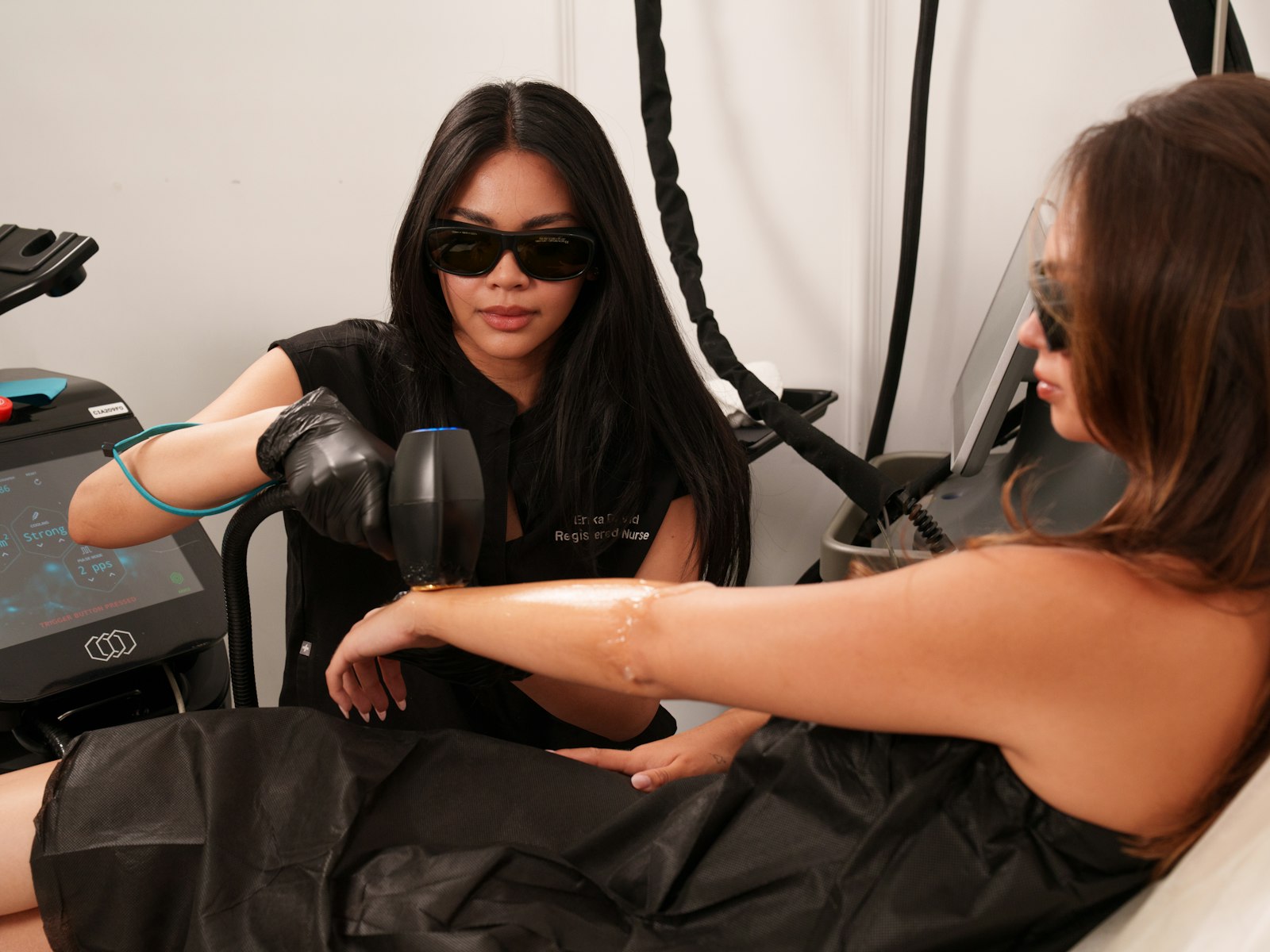
If your skin has picked up only mild colour and treatment cannot reasonably be postponed, an experienced practitioner may lower the energy (fluence) setting or extend the pulse duration to protect the skin, sometimes combined with more aggressive cooling. This reduces risk, but it also reduces the power delivered to the follicle, so results from that session are typically less thorough. It is a compromise, not a workaround, and a noticeably tanned or sunburnt area should simply be rescheduled rather than treated at a reduced setting.
Self-tanning products and spray tans cause a similar problem, since the artificial pigment sits in the outer skin layer and can also absorb laser energy or interfere with the treatment surface. These should be washed off and allowed to fully fade, not just showered away once, before a session.
Planning laser hair removal around sun exposure in the Maldives
Living or holidaying in the Maldives makes this a genuinely practical issue rather than a theoretical one. Bright, near-equatorial sun is a daily feature, not a seasonal event, and days on the beach, boat trips and snorkelling all add colour quickly. As a general guide, we recommend avoiding significant sun exposure and self-tanners for around two weeks before a session and continuing sun protection for at least two weeks afterwards, since treated skin is temporarily more sensitive to UV. For visitors planning several sessions during a trip, it is worth booking your itinerary so that beach days fall between sessions rather than immediately before one, and applying a broad-spectrum sunscreen daily regardless of treatment timing. If you are new to the treatment, our laser hair removal service page covers candidacy and what a course of treatment typically involves, our laser hair removal treatment guide explains how a full course is planned, and our article on building a sun-smart skincare routine covers daily sun protection in more depth.
Still deciding what's right for you?
Get instant access to the full Treatment Guide, concerns, downtime, aftercare, and what to expect at your first visit.
Frequently asked questions
How long should I wait after tanning before laser hair removal?
As a general guide, allow around two weeks for a tan to fade noticeably before treatment. Your practitioner will assess your skin on the day and may ask you to wait longer if colour is still present.
Can I go in the sun after a laser hair removal session?
Treated skin is more sensitive to UV for a period afterwards, so direct sun exposure should be limited and a broad-spectrum sunscreen used for at least two weeks after each session.
What if I only have a light tan – can settings just be adjusted?
Sometimes, for very mild colour, but this usually means a gentler, less effective session rather than full treatment. A visible or recent tan is generally a reason to reschedule rather than adjust around.
Does fake tan cause the same problem as sun tanning?
Self-tanning products can also interfere with treatment and should be removed and allowed to fully fade before your appointment.
Related reading: Laser Hair Removal Cost in the Maldives: Full Guide · Laser Hair Removal Aftercare: What to Do and Avoid
Sources & further reading
- American Academy of Dermatology – Laser hair removal: what to know before your treatment
- U.S. FDA – Laser hair removal: safety information
- Laser and light-based hair removal in skin of colour: a review (PMC)
Mahmoud Mohamed Samir is a digital marketing specialist at BrightSeen Marketing Agency, the agency that runs this clinic’s Google search and AI search visibility (SEO and GEO), Meta Ads and website. Medical content is reviewed by Dr. Alaa Zidan.
This article is for educational purposes and is not a substitute for personal medical advice. To discuss your skin and treatment options, please book a consultation.
Have a question about this?
Send a photo and a short note on WhatsApp for an honest treatment recommendation from Dr. Alaa.