PRP Hair Treatment in the Maldives: Sessions, Results and Cost Factors
 By Mahmoud Mohamed Samir · Published 14 November 2026 · 10 min read
Key takeaways
- PRP hair treatment in the Maldives uses a small sample of your own blood, concentrated and injected into the scalp to support thinning but still-active follicles.
- Evidence is encouraging but limited: pooled trials show a modest rise in hair density, and most of the evidence is rated low quality.
- It suits early to moderate thinning, not scarring hair loss or areas where follicles are already lost.
- Results build slowly over several months, and most protocols involve a short series of sessions followed by maintenance.
- Cost depends on the protocol, the number of sessions and what else is combined, so a scalp assessment comes before any figure.
If you are weighing up PRP hair treatment in the Maldives, the first thing to know is that it is a supportive treatment, not a cure for hair loss. It works best when the cause of the thinning is understood and the follicles are still alive, which is why a proper assessment matters more than the injections themselves.
Quick answer: PRP hair treatment is offered by Dr. Alaa Zidan, a dermatologist, at her Hulhumalé clinic in the Maldives. Platelet-rich plasma is prepared from your own blood and injected into the scalp to support miniaturising follicles. It is usually given as a short series, with gradual results over several months.
Living in the Maldives adds its own pressures on hair and scalp: constant heat and humidity, salt water from daily swimming or diving, and strong year-round sun. These do not cause pattern hair loss, but they shape how we plan aftercare, so we build that into every PRP schedule.
What PRP hair treatment in the Maldives involves
How platelet-rich plasma works
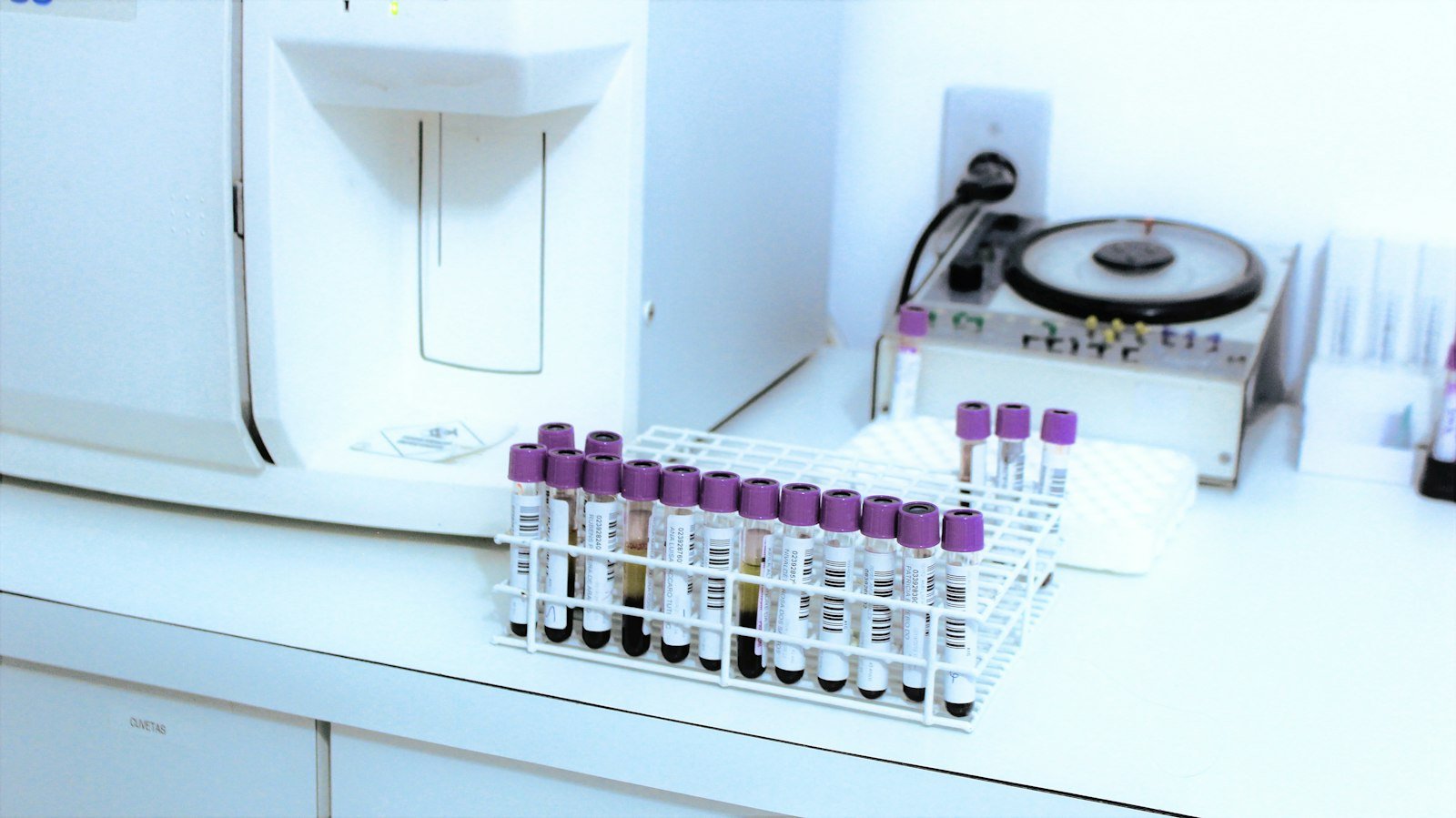
Platelets are small blood cells that carry growth factors, the signalling proteins involved in tissue repair. In PRP, a little blood is drawn from your arm and spun in a centrifuge, which separates the platelet-rich layer from the rest of the blood. DermNet describes the process as careful centrifugation with a set protocol, because speed and timing matter if the platelets are not to be damaged. The concentrated plasma is then injected into the skin.
The idea is that these growth factors can encourage dormant or weakened follicles to re-enter a healthier growth phase. In male and female pattern hair loss, follicles shrink gradually over years, producing finer and shorter hairs. PRP aims to support those follicles rather than create new ones.
What happens at an appointment
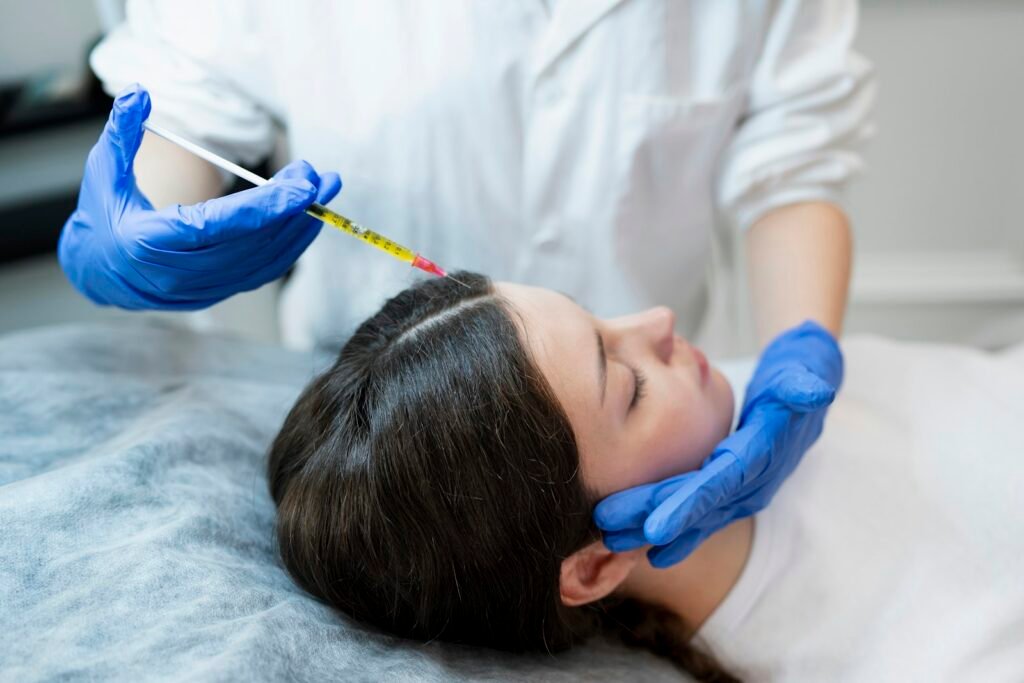
After a scalp examination, we take the blood sample, prepare the PRP and numb the scalp where needed. The plasma is then placed in small injections across the thinning areas. The whole visit usually takes under an hour. Most people return to normal activity the same day, though the scalp can feel tender and slightly swollen for a short time. For a step-by-step look at each visit, see our hair and scalp restoration guide.
Preparing for your appointment
Preparation is simple. Eat and drink normally beforehand, because being well hydrated makes the blood draw easier and the plasma easier to prepare. Wash your hair as usual and avoid heavy styling products on the day. If you take blood thinners, anti-inflammatory painkillers or supplements such as fish oil, tell us in advance, as some of these can affect bruising or the quality of the platelets. We also ask you to bring any recent blood test results, since iron, ferritin and thyroid levels often explain part of the picture.
Want the full Treatment Guide?
A plain-language guide to choosing the right treatment, what downtime really looks like, and how to prepare for your first visit, unlocked instantly, no waiting.
What the evidence says about PRP for hair loss
It is fair to be sceptical, because PRP has no single standard protocol. A systematic review and meta-analysis of 27 controlled trials, covering 1,117 participants with pattern hair loss or alopecia areata, found that PRP increased hair density compared with saline injections over a medium-term follow-up, by around 25 hairs per square centimetre. The authors rated the certainty of that evidence as low, and for alopecia areata they could not say whether PRP did better than steroid injections. No serious adverse events were linked to PRP in those trials.
DermNet makes a similar point: PRP has been reported to wake dormant follicles in male pattern hair loss, but much of the supporting evidence comes from case series rather than large trials. In practice, that means we describe PRP as a reasonable, low-risk option that can improve density and thickness in suitable patients, and we avoid promising a particular result. Preparation methods, platelet concentration and injection technique all vary between clinics, which is one reason studies disagree.
A fair expectation is improvement rather than transformation: slower shedding, better coverage and somewhat thicker hairs. Photographs taken under the same lighting at each visit are the most honest way to judge progress, and we use them to decide whether to continue, adjust or stop.
Who is a good candidate for PRP hair treatment
When PRP is a sensible option
PRP tends to suit people with early to moderate thinning, where hairs are finer but follicles are still present. This includes male and female pattern hair loss, and some people whose shedding has settled after a trigger such as illness or childbirth but whose density has been slow to return. It also works well as part of a plan, alongside medical treatment or other regenerative options. If you are unsure what is behind your hair loss, our article on the causes of hair loss is a useful starting point.
When we advise against it or wait
PRP is not suitable for scarring alopecias, or for smooth areas where follicles have already been lost, because there is nothing left to stimulate. We also hold off if a treatable cause of shedding has not been addressed, such as an iron or thyroid problem. DermNet lists several situations where PRP is best avoided, including a very low platelet count, blood-clotting disorders, active infection, chronic liver disease and treatment with anticoagulants. Tell us about any medicine you take, and about recent illness or crash dieting, before we plan anything.
How many sessions you need and when results show
Schedules differ between studies and clinics, so there is no universal number. A common approach is a short initial series, often three or four sessions spaced about a month apart, followed by maintenance sessions a few times a year if the response justifies it. We set the plan for each patient after the first review rather than selling a fixed package.
Hair grows slowly, so patience is part of the treatment. Shedding may briefly increase in the first weeks as weak hairs are replaced. Many patients notice less shedding and finer hairs thickening from around three months, with the clearest picture at six months or later. If you want to understand why regrowth takes so long, our hair restoration results timeline explains the hair cycle in plain terms.
Aftercare, downtime and side effects
Side effects are usually mild and short-lived: tenderness, a feeling of tightness, small bumps or pinpoint bleeding at injection sites, and occasional headache. DermNet also notes brief local inflammation and, rarely, nerve irritation as potential complications. Because PRP comes from your own blood, allergic reactions to the plasma itself are not expected, although infection is always a theoretical risk with any injection, which is why we use sterile technique throughout.
Aftercare is simple but worth following. We usually advise keeping the scalp out of the sea and swimming pool for the first day or two, avoiding vigorous exercise and heavy sweating on the day of treatment, and washing hair gently from the following day. In the Maldives, we also suggest a hat or shade for the first few days, because a freshly treated scalp should not sit in strong sun. Avoid scratching, hair dye and harsh styling until the scalp has settled.
PRP hair treatment cost: what affects it
We do not quote prices in articles, because the right plan depends on the person. The factors that shape the cost of PRP hair treatment are the area being treated, the number of sessions in the initial series, whether maintenance is needed, and whether PRP is combined with another treatment. A larger area of diffuse thinning generally needs more plasma than a small patch. Be cautious about very low prices, since PRP kits, technique and sterile practice all affect safety and consistency. For a wider comparison of what drives price across regenerative options, see our guide to hair restoration cost in the Maldives.
How PRP compares with other hair treatments
PRP is one of several regenerative options. Exosome therapy uses signalling vesicles rather than platelets, and growth factor concentrate uses a purified, standardised preparation. Each has a different evidence base and a different role, and none replaces proper diagnosis. We compare them in PRP vs exosomes for hair if you want the detail.
Medical treatments such as topical minoxidil remain a cornerstone for many patients with pattern hair loss, and PRP is often used on top of them rather than instead of them. A hair transplant is a different category altogether, suited to stable, advanced loss. Our dermatologist will help you decide whether PRP, another regenerative option, a medical plan or a combination makes sense for your pattern and your goals.
Getting PRP hair treatment in Hulhumalé
At our Hulhumalé clinic, the first step is a consultation: we examine the scalp, ask about medical history, family history, diet and recent illness, and decide whether PRP is appropriate at all. If it is not, we say so. If it is, we explain the protocol, the likely timeline and the cost factors before you commit to anything. You can read about our wider hair loss treatment in the Maldives or message us on WhatsApp with a photo of the area that concerns you, and Dr. Alaa will reply with an honest view on next steps.
Still deciding what's right for you?
Get instant access to the full Treatment Guide, concerns, downtime, aftercare, and what to expect at your first visit.
Frequently asked questions
Where can I get PRP hair treatment in the Maldives?
Dr. Alaa Zidan, a dermatologist, offers PRP for hair at her Hulhumalé clinic in the Maldives, after an in-person scalp assessment to confirm it suits your type of hair loss.
Is PRP hair treatment painful?
Most people describe it as uncomfortable rather than painful. We can numb the scalp first, and tenderness usually settles within a day or two.
Does PRP regrow hair on a bald area?
No. PRP supports follicles that are still present but weakened. It cannot restore follicles that have been lost, which is why smooth bald areas and scarring alopecias are not suitable.
Can I swim in the sea after PRP?
We usually advise waiting a day or two before swimming in the sea or a pool, and covering the scalp from strong sun in the first days. We confirm the timing for you at the appointment.
How long do the results last?
PRP does not stop the underlying cause of pattern hair loss, so benefits fade without maintenance. Many patients have occasional top-up sessions, and we review the need at each follow-up.
Local care in the Maldives: Dr. Alaa Zidan, a dermatologist, sees patients at her clinic in Hulhumalé, a short journey from Malé and the airport, so you can talk this through in person without leaving the Maldives.
Sources & further reading
- PubMed Central: Platelet-rich plasma for the treatment of alopecia: a systematic review and meta-analysis
- DermNet: Platelet-rich plasma – dermatological applications
- PubMed Central: Is autologous platelet-rich plasma capable of increasing hair density in patients with androgenic alopecia? A systematic review and meta-analysis of randomized clinical trials
Not sure whether PRP is right for your hair? Send a photo on WhatsApp and Dr. Alaa will explain honestly what she would recommend. You can also get in touch to arrange a consultation.
Mahmoud Mohamed Samir is a digital marketing specialist at BrightSeen Marketing Agency, the agency that runs this clinic’s Google search and AI search visibility (SEO and GEO), Meta Ads and website. Medical content is reviewed by Dr. Alaa Zidan.
This article is for educational purposes and is not a substitute for personal medical advice. To discuss your skin and treatment options, please book a consultation.
Have a question about this?
Send a photo and a short note on WhatsApp for an honest treatment recommendation from Dr. Alaa.