Are You a Cheek Filler Candidate? Who Suits It in the Maldives
 By Mahmoud Mohamed Samir · Published 12 November 2026 · 9 min read

Key takeaways
- A good cheek filler candidate is usually an adult with early midface volume loss, a flatter or slightly hollowed mid-face, or a wish for more defined cheekbones.
- Hyaluronic acid cheek filler is placed deep, close to the cheekbone, so it supports and lifts rather than simply adding surface puffiness.
- It is not suitable during pregnancy or breastfeeding, over inflamed or infected skin, or for anyone allergic to an ingredient in the product.
- A consultation looks at the whole face, because the cause of a hollow look is not always the cheek itself.
- Results are temporary and adjustable, and cost depends on how much product your face needs, so it is explained at consultation.
Being a good cheek filler candidate is less about age and more about what is actually changing in your face. Some people notice a flatter mid-face in their thirties, others in their fifties, and some never lose volume but simply want more structure. This guide explains who tends to suit cheek filler, who should wait or consider something else, and what to expect when you come in to discuss it.
In the Maldives, year-round heat, strong sun and an active outdoor life – diving, swimming, island hopping – shape the practical side of filler, because strenuous exercise, saunas and long sun exposure are best avoided in the first days afterwards, so timing around travel and holidays matters.
In short: cheek filler restores or enhances volume in the mid-face with hyaluronic acid placed deep near the cheekbone. At our Hulhumalé clinic in the Maldives, Dr. Alaa Zidan, a dermatologist, first assesses whether you are a suitable candidate, because the right plan depends on your face, not a standard syringe.
What cheek filler does and how it works
Why the mid-face changes with age
As the face ages, the fat pads in the cheek gradually lose volume and shift downward, and the bone beneath slowly changes shape too. The result is a mid-face that can look flatter or slightly hollowed even when the skin itself is healthy, and sometimes shadows deepen beneath the eyes or around the nose and mouth. A published systematic review describes mid-face volume loss as a common concern among ageing individuals, giving a hollow or sunken appearance.
How the filler restores support
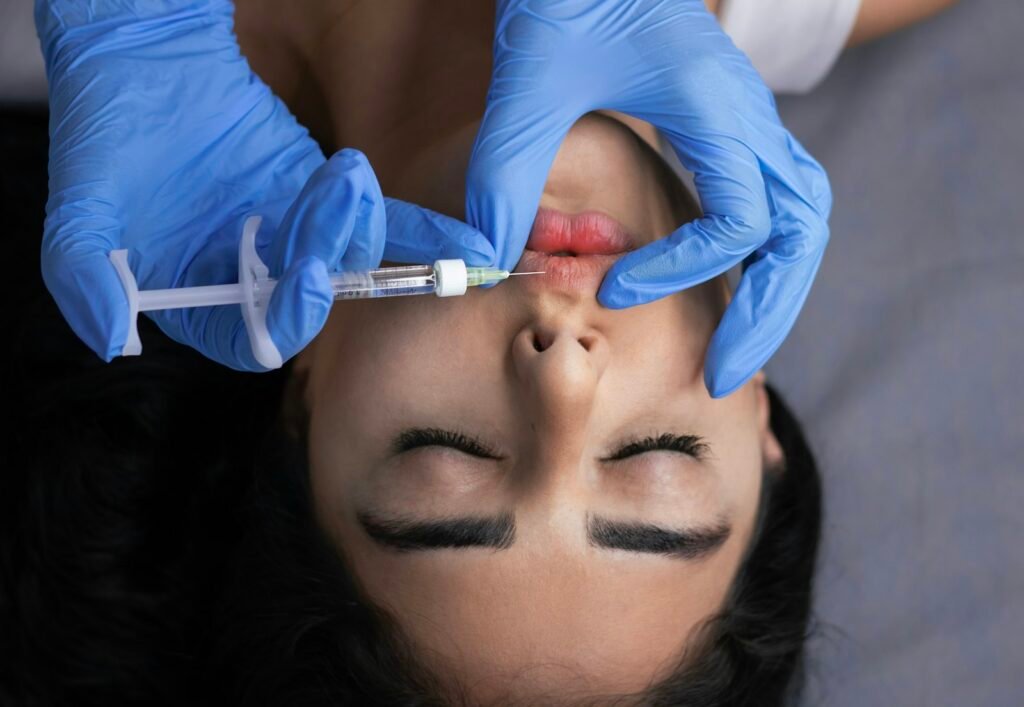
Hyaluronic acid filler is a gel that holds water and adds volume. For the cheeks it is placed deep, close to the bone, using a fine needle or a blunt cannula. Because it sits on bone rather than in soft tissue, it supports the whole cheek area, which is what gives a natural contour rather than a swollen look. Hyaluronic acid is also not permanent: it gradually breaks down, and it can be dissolved with an enzyme if ever needed, so results can be adjusted.
Cheek filler compared with other treatments
Cheek filler is for volume and structure. Skin boosters improve hydration and skin quality without adding contour, so they will not lift a hollow cheek, while they can suit skin that looks dull or fine-lined rather than flat. Our comparison of skin boosters and dermal fillers explains the difference, and some patients combine the two over time. Choosing between them starts with identifying whether your concern is lost volume or lost skin quality.
Want the full Treatment Guide?
A plain-language guide to choosing the right treatment, what downtime really looks like, and how to prepare for your first visit, unlocked instantly, no waiting.
Who is a good cheek filler candidate
Signs you may suit cheek filler
Good candidates are typically adults who notice a flatter mid-face, early volume loss, or a hollow look that traces back to cheek support. Some notice that their tired look comes from lost cheek volume pulling on the lower eyelid rather than from the eye area itself, in which case treating the cheek can soften the shadow beneath. Healthy, reasonably firm skin and realistic expectations make for the best results.
When you want more definition, not a repair
Some patients never lost volume at all but want more defined, sculpted cheekbones as a deliberate change. That is a legitimate reason to consider filler, and it is a different conversation from treating ageing. We discuss it openly, including how much change looks natural on your face shape and how far you would like to go.
Who should wait, or consider a different option
Cheek filler is not recommended during pregnancy or breastfeeding. It should not be placed over active infection, a cold sore flare or inflamed skin, and it is not suitable if you are allergic to an ingredient in the product. If you take blood-thinning medicines, have a bleeding tendency or a history of significant scarring, tell us at the consultation, because these change the plan and the bruising risk.
Filler also adds a little weight, so in a face with marked skin laxity, adding volume alone can make the lower face look heavier rather than lifted. In that situation we may suggest starting with a different treatment, or combining approaches. A candid answer such as “not yet” or “not this” is part of a proper assessment.
Expectations matter too. Filler can refresh how rested and balanced a face looks, but it cannot recreate a different face, and if the goal is a dramatic change we will say what is realistic. It also helps to arrive with a clear idea of what you dislike in the mirror rather than a single photograph to copy, because every face has different bone structure and fat distribution.
What the consultation covers
Assessing the whole face
We look at your face from the front and in profile, at rest and when you smile, and ask what bothers you. A hollow under the eye may come from the cheek, the tear trough or both, and a heavy jawline may change how the cheek looks. Cheek filler pairs naturally with under-eye filler for hollows or jawline and chin filler for patients who want the mid and lower face considered together.
Setting realistic expectations
Filler improves volume and contour, but it does not tighten loose skin or change the bone. We explain what is achievable, what is subtle and what may need more than one visit. Many people are happiest with a gradual approach, adding a little at a time until the face looks refreshed rather than altered.

The treatment day, results and how long they last
The appointment takes around 30 to 45 minutes, with numbing cream applied first. Mild swelling or bruising can occur for a few days, and it is sensible to avoid strenuous exercise, alcohol and facial massage for 24 to 48 hours; our guide to cheek filler aftercare covers the details. The final, settled result is visible at around two weeks, once any swelling has fully resolved.
What the appointment feels like
After a discussion, consent and photographs, numbing cream is applied. You may feel pressure and a mild pinch as the filler is placed, and we check the result with you sitting upright so that both sides can be compared naturally. Most people go home the same day, and it helps to avoid scheduling filler in the two weeks before an important event or a long flight, so that any swelling or bruising has time to settle.
Duration varies with the product, the amount placed and your own metabolism, and our article on how long cheek filler lasts explains what to expect and when top-ups usually make sense.
Risks and safety
Common and uncommon effects
A systematic review of hyaluronic acid filler trials in the face reported swelling, pain, redness, bruising, lumps and bumps, firmness, tenderness, itching and skin discolouration as the typical adverse events. It found that most were mild and settled over time, while noting that rare severe complications cannot be ignored, because they can be irreversible. The same review reported that swelling, lumps and firmness differed between the mid-face and other areas such as the nasolabial fold, which is one reason technique and placement matter.
When to call us
Severe or worsening pain, a patch of skin turning white, grey or dusky, or any change in vision after filler needs urgent medical attention rather than waiting to see what happens. Choosing an experienced practitioner who knows the anatomy and can manage complications, including dissolving filler, is the best protection.
Cheek filler cost: what affects it
People understandably ask about cheek filler cost early, and we never quote a figure without seeing you. It depends mainly on how much product your face needs, which product is chosen for the structure you require, whether other areas are treated at the same time, and whether follow-up top-ups are planned. A subtle refresh needs less than a complete rebuild. Judge value over the full plan and how long it lasts, not only the price of a single syringe, and ask what is included if a small adjustment is needed. The full figure is explained at consultation before anything is booked.
Choosing a clinic for cheek filler in the Maldives
Look for a clinic that examines you before suggesting product, explains risks plainly, uses hyaluronic acid products that can be dissolved if needed, and is clear about follow-up. A dermatologist who treats the skin and facial structure together can advise honestly when filler is not the answer.
Getting cheek filler in Hulhumalé
Dr. Alaa Zidan offers cheek filler in the Maldives at Life Care Medical Center in Hulhumalé, a short drive from Malé. For a step-by-step look at each visit, see our cheek filler guide. If you are not sure whether you are a candidate, you are welcome to message us on WhatsApp for a calm, no-pressure chat before booking.
Still deciding what's right for you?
Get instant access to the full Treatment Guide, concerns, downtime, aftercare, and what to expect at your first visit.
Frequently asked questions
Who is a good candidate for cheek filler?
Adults with early mid-face volume loss, a flatter or slightly hollowed mid-face, or a wish for more defined cheekbones, who have healthy skin and realistic expectations, are typically good candidates.
Am I too young for cheek filler?
There is no fixed age. Suitability depends on your anatomy and goals rather than a number, and some younger adults want definition rather than repair. We assess each face individually and will say if waiting is wiser.
Who should not have cheek filler?
Cheek filler is not recommended during pregnancy or breastfeeding, over infected or inflamed skin, or for anyone allergic to a product ingredient. Tell us about blood thinners or a bleeding tendency beforehand.
Where can I get cheek filler in the Maldives?
Dr. Alaa Zidan, a dermatologist, offers cheek filler at Life Care Medical Center in Hulhumalé, a short drive from Malé. A consultation comes first to confirm you are a suitable candidate.
Can cheek filler be reversed?
Yes. Hyaluronic acid filler can be dissolved with an enzyme if needed, which is one reason it is widely used. It also breaks down on its own over time.
Sources & further reading
- PMC: Effect of hyaluronic acid dermal fillers for mid-face volume enhancement: A systematic review and meta-analysis
- PMC: Adverse Events Reported From Hyaluronic Acid Dermal Filler Injections to the Facial Region: A Systematic Review and Meta-Analysis
Mahmoud Mohamed Samir is a digital marketing specialist at BrightSeen Marketing Agency, the agency that runs this clinic’s Google search and AI search visibility (SEO and GEO), Meta Ads and website. Medical content is reviewed by Dr. Alaa Zidan.
This article is for educational purposes and is not a substitute for personal medical advice. To discuss your skin and treatment options, please book a consultation.
Have a question about this?
Send a photo and a short note on WhatsApp for an honest treatment recommendation from Dr. Alaa.