First Time Botox in the Maldives: What Your First Appointment Involves
 By Mahmoud Mohamed Samir · Published 17 November 2026 · 9 min read
Key takeaways
- First time Botox in the Maldives should begin with a consultation, not an injection: your muscle pattern, medical history and goals decide the plan.
- The injections themselves take only a few minutes, results begin within roughly a week and settle by about two weeks, and the effect lasts around three to four months.
- A conservative first treatment with a follow-up review is a sensible way to start, because it is easier to add a little more than to undo too much.
- Side effects such as small bruises or a mild headache are usually temporary, and the most important safeguard is who performs the treatment.
- Cost depends on the areas treated and the units each needs, so an honest quote follows an assessment rather than a price list.
First time Botox in the Maldives can feel like a big decision, mostly because of the unknowns: how it feels, whether you will look frozen, and who you can trust to do it well. This guide walks through your first appointment from start to finish so that nothing about it comes as a surprise, and it explains the questions worth asking before you book.
Short answer: At her Hulhumalé clinic in the Maldives, dermatologist Dr. Alaa Zidan begins every first Botox visit with a consultation that maps your muscle movement. The injections take under a minute, results appear within days and settle by about two weeks, and a review follows. Dosing is personal, so the plan is set at that visit.
The Maldives adds some local considerations for a first-timer. Bright year-round sun makes many people squint, which deepens crow’s feet and frown lines over time, and because results take up to two weeks to settle, the timing of your first treatment around holidays, weddings and flights deserves a little planning.
What Botox is and what it can and cannot do
How it works
Botox, or botulinum toxin, temporarily relaxes the small muscles that crease the skin when you frown, raise your brows or squint. With the muscle softened, the lines above it smooth out and stop deepening. The American Academy of Dermatology describes it as a treatment that relaxes certain facial muscles to soften lines such as frown lines and crow’s feet. At the right dose it dampens movement rather than removing it, so you still look like yourself, only more rested.
What it will not do
Botox treats lines caused by muscle movement. It does not replace lost volume, tighten sagging skin or erase the lines that remain visible when your face is relaxed, although consistent treatment can stop those lines from deepening. For volume and contour, other treatments such as fillers are used, and for skin quality, options such as skin boosters or peels may be better suited. A good consultation tells you which of your concerns Botox can address and which it cannot, rather than treating everything with the same product.
Want the full Treatment Guide?
A plain-language guide to choosing the right treatment, what downtime really looks like, and how to prepare for your first visit, unlocked instantly, no waiting.
Is Botox right for you as a first-timer?
Botox suits adults with frown lines, forehead lines or crow’s feet that bother them, and also people who want to soften early lines before they set in. It is also used for a gummy smile, jaw slimming, excessive sweating and migraine prevention, each of which is planned separately.
There are people who should wait or avoid it. Pregnancy and breastfeeding are reasons to postpone, since the effect on an unborn child is not known. Certain neuromuscular conditions, an infection or active skin problem at the injection site, and a known allergy to the product also need careful consideration. This is why the medical history comes first. If you are unsure, our guide to how often you should get Botox explains how a long-term plan usually looks.
Setting realistic expectations
A first treatment is best approached as the start of a conversation with your own face, not a one-off transformation. Expect softer lines rather than erased ones, a natural look rather than a changed one, and a result that wears off, which is reassuring if you decide Botox is not for you. Photographs at rest and in movement help you judge the change fairly. If a clinic promises dramatic results from a single session, or pushes a large package before examining you, treat that as a warning sign rather than a bargain.
First time Botox in the Maldives: preparing for your appointment
What to tell your dermatologist
The AAD advises telling your dermatologist about all medicines and supplements you take, including pain relievers, blood thinners and over-the-counter products such as aspirin, as well as herbs and vitamins. You should also say whether you are pregnant or plan to become pregnant, and mention any previous surgery or cosmetic treatment, even if it seems unimportant. These details affect bruising risk and the safety of treatment.
Questions worth asking
The same guidance suggests asking how many of these procedures the provider has performed, who will give the injections, what the total cost will be and what results to realistically expect. Add to that: which areas are recommended and why, how the dose will be decided, and what happens if you are unhappy with the result. A confident clinician welcomes these questions.
Timing around events and travel
Because the full effect settles over roughly ten to fourteen days, book your first treatment at least two weeks before a wedding, photograph or flight. That leaves room for a review and any small adjustment. If you have a dive trip or a long boat journey planned, mention it so the day of your appointment can be chosen sensibly.
What happens at the appointment
Consultation and muscle mapping
Dr. Alaa starts by watching your face move: frowning, raising the brows, squinting and smiling. This reveals which muscles are doing the work and where lines form, and it is the basis for a plan that preserves natural expression. Photographs are usually taken so that progress can be compared at the review. We discuss the areas, the likely number of units and the look you want, and we tell you plainly if we think less is better.
The injections
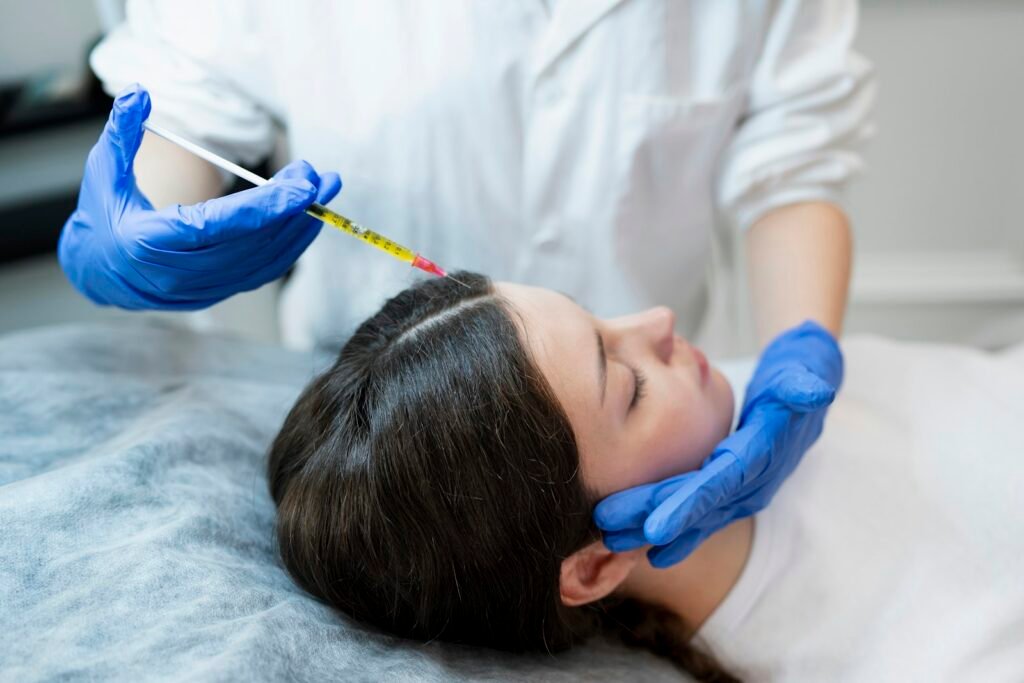
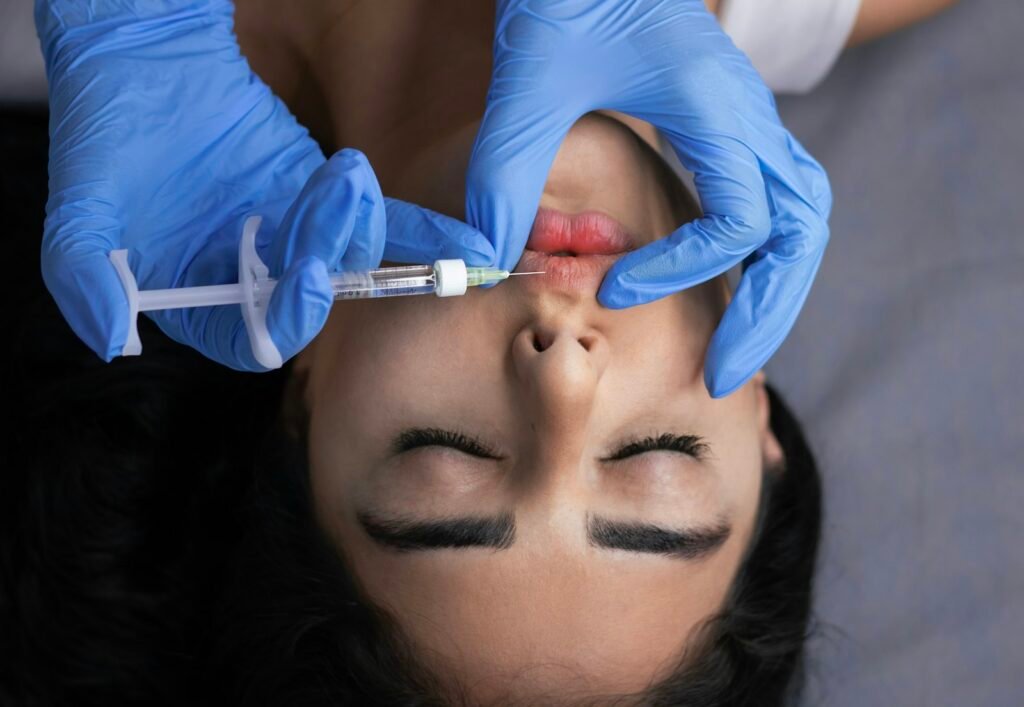
A few tiny injections take under a minute, and the whole visit lasts around twenty minutes. Most people describe brief pinpricks rather than pain. A numbing cream is not routinely needed, but you can ask for one if you are nervous. There is no recovery period in the usual sense, and the AAD notes that people can return to most everyday activities immediately.
Straight afterwards
You may see small bumps that settle within the hour and the occasional pinpoint bruise. We ask you to avoid lying flat and strenuous exercise for a few hours, and to avoid rubbing the treated areas. Everything else is normal on the same day. Our guide to Botox aftercare lists what to do and avoid in detail.

How results unfold over the first two weeks
Days one to seven
Nothing dramatic happens on the day. Results typically begin to show within three to seven days, according to the AAD, with the first softening usually noticed around days three to five. Do not judge the outcome early, and avoid asking for more on day two.
Week two and your review
By ten to fourteen days the effect has settled, and this is when a review is most useful. We offer a complimentary two-week review so that any asymmetry or under-treated area can be fine-tuned while it is still easy to do. A conservative first session plus a review is usually kinder to a first-timer than a heavy first dose.
How long it lasts
Improvements generally last about three to four months, sometimes longer, after which movement gradually returns and the lines drift back. Many people find that with regular treatment the lines look softer over time because the muscles are used less forcefully.
Risks, side effects and how they are managed
Botox given by a trained clinician is a well-established treatment, but it is a medical procedure and carries risks. Common effects are temporary: tenderness, tiny bruises, a mild headache or a feeling of tightness in the first days. Less commonly, the product can affect a neighbouring muscle, producing a heavy brow or a drooping eyelid, which is why placement and dose matter and why the injector must know the anatomy well. These effects are temporary and fade as the product wears off, typically over weeks. Our article on Botox side effects goes through what is normal and when to call us.
The best safeguard is the provider. The AAD recommends that treatment be performed by a dermatologist or by someone working with a dermatologist immediately available. Be cautious of heavily discounted offers, unlicensed injectors or products you cannot identify.
Getting Botox in Hulhumalé
Botox cost in the Maldives: what affects it
Botox cost in the Maldives depends on the number of areas treated and the units each area needs, since a strong forehead muscle needs a different dose from a delicate crow’s feet area. We do not publish a single price, and the full figure is explained at consultation before anything is booked. That is also the safest way to compare clinics: ask for a quote that states the areas and units, not a single headline figure.
Choosing a provider
If you are looking for Botox in the Maldives, the questions above are your checklist. Dr. Alaa Zidan is a dermatologist, and our clinic at Life Care Medical Center in Hulhumalé is a short drive from Malé. If you are searching for a dermatologist in Hulhumalé or a Botox doctor in Hulhumalé, a consultation lets you see the approach before you commit. For a step-by-step look at each visit, see our Botox guide. We also explain how we treat frown lines and the forehead in separate articles.
To start, send a message on WhatsApp with a photo of your face at rest and when you frown, and Dr. Alaa will tell you what she would suggest, or get in touch to arrange a consultation.
Still deciding what's right for you?
Get instant access to the full Treatment Guide, concerns, downtime, aftercare, and what to expect at your first visit.
Frequently asked questions
Where can I get first time Botox in the Maldives?
Dr. Alaa Zidan offers Botox at her dermatology clinic at Life Care Medical Center in Hulhumalé, Maldives. Every first visit starts with a consultation and muscle mapping before any treatment is planned.
Does first time Botox hurt?
Most people feel brief pinpricks and a little pressure. The session is short, and discomfort fades quickly afterwards.
How much Botox does a first-timer need?
There is no fixed number. The dose depends on your muscle strength and the areas treated, and we usually take a conservative approach for a first session, then adjust at the two-week review.
Will I look frozen after my first treatment?
Not when the dose is chosen carefully. The aim is to soften the movement that creates lines while keeping your expressions natural.
How far ahead of an event should I book?
At least two weeks, because the effect takes about ten to fourteen days to settle and you may want a review for any small adjustment.
Sources & further reading
- American Academy of Dermatology: Botulinum toxin therapy: Overview
- American Academy of Dermatology: Botulinum toxin therapy: Preparation
This article is for educational purposes and is not a substitute for personal medical advice. To discuss your skin and treatment options, please book a consultation.
Have a question about this?
Send a photo and a short note on WhatsApp for an honest treatment recommendation from Dr. Alaa.